
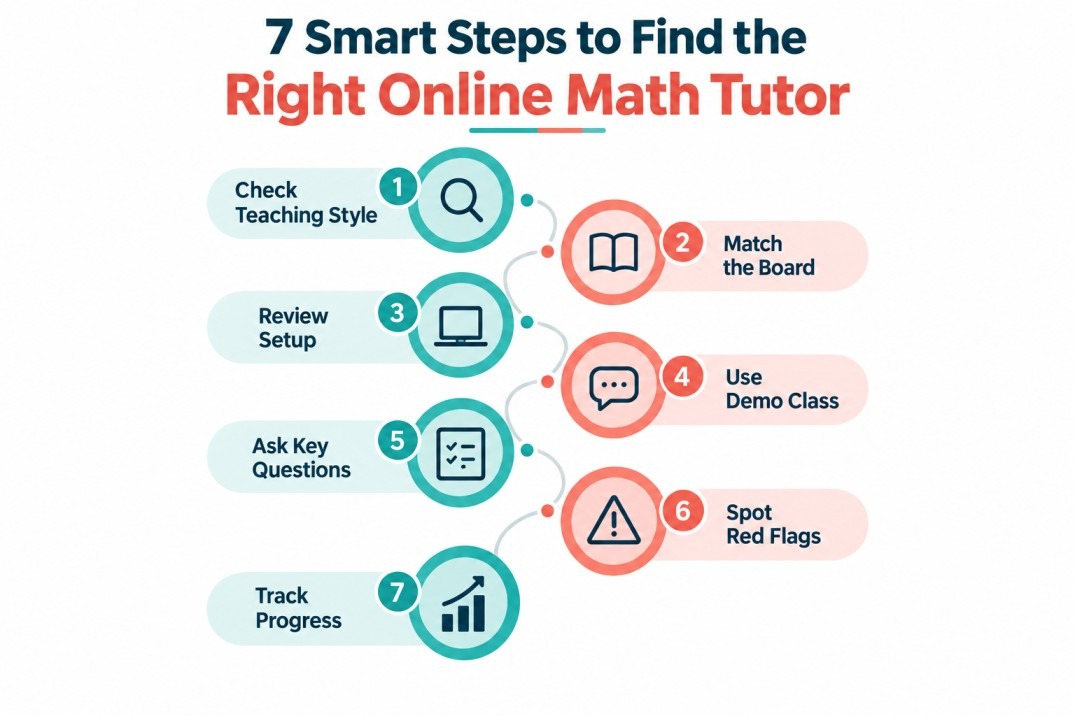
Your child understands the first two questions in a Maths chapter, gets stuck on the third, and then quietly stops trying. You find a tutor online, read glowing reviews, compare fees, and still wonder: Will this online math tutor actually understand my child?
That’s the right question. For Class 7–10 students, Maths tutoring isn’t simply about explaining formulas. The tutor needs to identify why a student is getting stuck, rebuild missing concepts, and gradually make the child comfortable solving problems independently.
Why Choosing the Right Tutor Matters
Classes 7–10 are when Maths becomes noticeably more demanding. Algebra, geometry, linear equations, statistics and other topics start connecting with one another.
An online math tutor who only helps with homework may get your child through today’s worksheet without fixing the underlying problem.
Look for someone who can:
- Identify weak concepts instead of treating every mistake separately.
- Explain the same idea in more than one way.
- Give enough practice without overwhelming the student.
- Encourage the child to explain their own reasoning.
Adapt lessons when the student’s pace changes
Match Your Online Math Tutor to Your Child’s Board
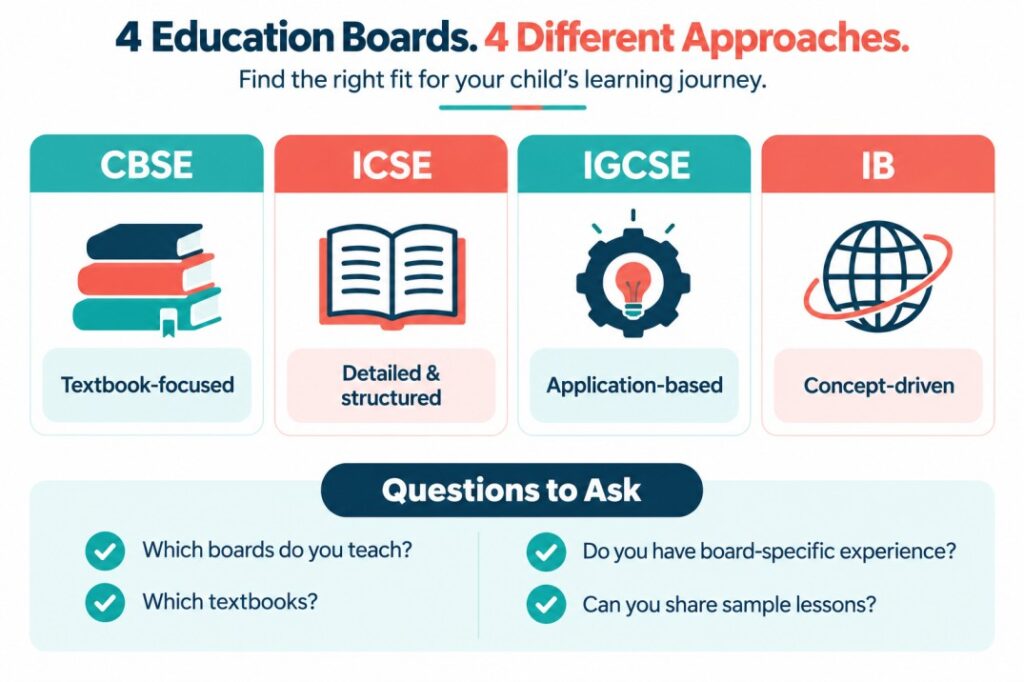
A tutor doesn’t necessarily need to teach every board, but they should understand the curriculum your child follows.
For CBSE and ICSE students, familiarity with textbook patterns and school expectations matters. IGCSE and IB students may need more emphasis on conceptual understanding, application and mathematical reasoning.
Before choosing, ask:
- Which boards and classes do you currently teach?
- Which textbooks or resources do you normally use?
- Can you teach the child’s current chapter rather than starting from a generic programme?
- How do you prepare students for school tests?
Check How Your Online Math Tutor Explains Maths
Good Maths teaching isn’t about talking continuously while the student watches.
A strong tutor asks questions such as, “Why did you choose this step?” or “What changes if this number becomes negative?” Those questions reveal whether the student actually understands the method.
Watch for explanations that move from concept → worked example → guided practice → independent problem-solving.
If every lesson becomes the tutor solving questions while the child copies, that’s a warning sign.
Look at the Online Teaching Setup
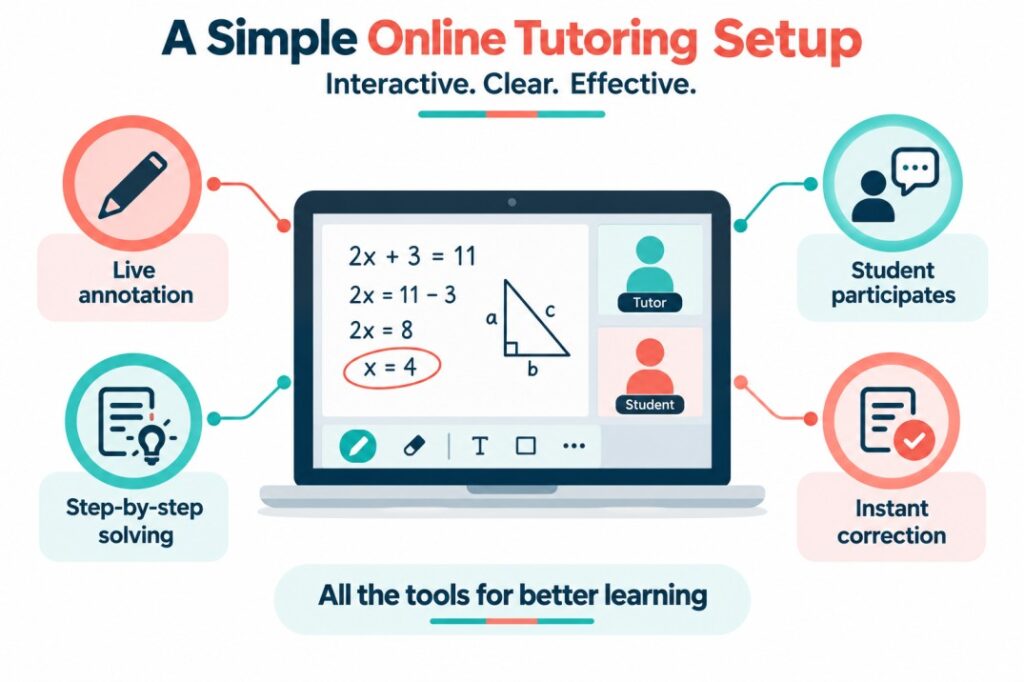
Parents sometimes worry that online Maths won’t work because the tutor can’t physically sit beside the student. That’s a reasonable concern, but the technology itself isn’t usually the deciding factor.
For example, in a well-run online Class 8 algebra lesson, a tutor can use a digital whiteboard to write each transformation clearly, ask the student to solve the next step, and immediately correct an error. Geometry can also work well when diagrams are drawn and annotated live.
The important question is whether the student is doing the Maths, not whether the class happens through a screen.
Evaluate the Tutor’s Experience
Don’t be overly impressed by a long list of qualifications. Ask about relevant teaching experience.
The most useful experience is often:
- Teaching the same age group your child belongs to.
- Working with students who have similar learning gaps.
- Understanding different school and board requirements.
- Handling students who are hesitant to ask questions.
- Adjusting lesson difficulty when a student progresses.
A tutor who understands teenagers can also tell the difference between “I don’t know this” and “I don’t want to admit I don’t know this.”
Use the Demo Class Properly
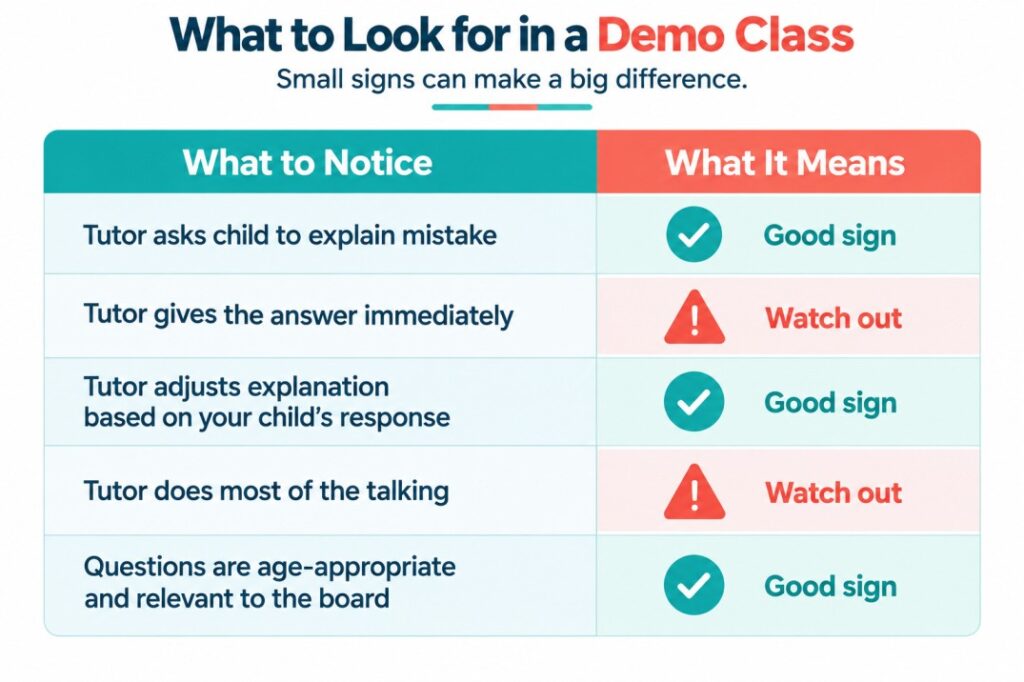
A demo class shouldn’t be judged by whether your child gets every answer correct.
Instead, observe what happens when your child gets something wrong.
| What You Notice | What It Tells You |
| Tutor asks the student to explain the mistake | Focuses on understanding |
| Tutor immediately gives the answer | May encourage dependence |
| Student solves part of the problem | Good opportunity for guided practice |
| Tutor changes explanation when student struggles | Shows adaptability |
| Most of the session is tutor talking | Limited student participation |
| Tutor discusses a learning plan afterward | Shows attention to individual needs |
After the demo, ask your child one simple question: “Did you feel comfortable saying you didn’t understand?”
That answer can be more useful than a parent’s impression of the tutor.
Ask These Questions Before Paying
Don’t hesitate to ask direct questions before committing.
- How will you assess my child’s current level?
- How will you decide what to teach each week?
- How do you handle repeated mistakes?
- Will my child get practice work between classes?
- How will you communicate progress to parents?
- What happens if my child is ahead or behind the planned pace?
Clear answers are a good sign. Vague promises about “guaranteed improvement” aren’t.
Watch for These Red Flags
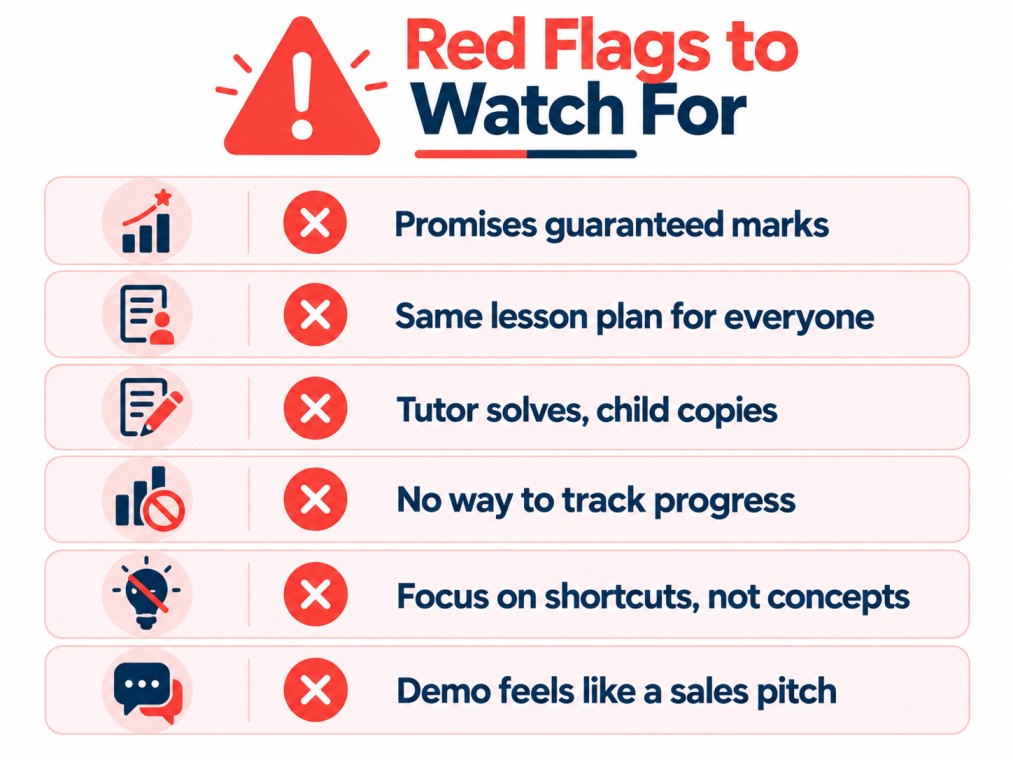
Be cautious if a tutor:
- Promises a specific marks increase without assessing the child.
- Uses the same lesson plan for every student.
- Does most of the solving during class.
- Avoids explaining how progress will be measured.
- Focuses heavily on memorising shortcuts.
- Can’t clearly explain their board or class experience.
- Makes the demo feel like a sales presentation rather than a lesson.
Cheap tutoring isn’t automatically bad, and expensive tutoring isn’t automatically good. Judge the teaching, not the price tag.
Online or In-Person: Which Works Better?
For many Class 7–10 students, both an online math tutor and in-person tuition can work. The better choice depends on the child’s learning habits.
Online lessons can offer:
- No travel time.
- Easier access to a specialist tutor.
- Digital whiteboards and shared resources.
- Convenient scheduling around school and activities.
In-person lessons may suit students who struggle significantly with screen distractions or need more physical supervision.
For families in Powai, Mumbai, online tutoring can also remove the practical headache of coordinating travel after school.
Check How Progress Will Be Tracked
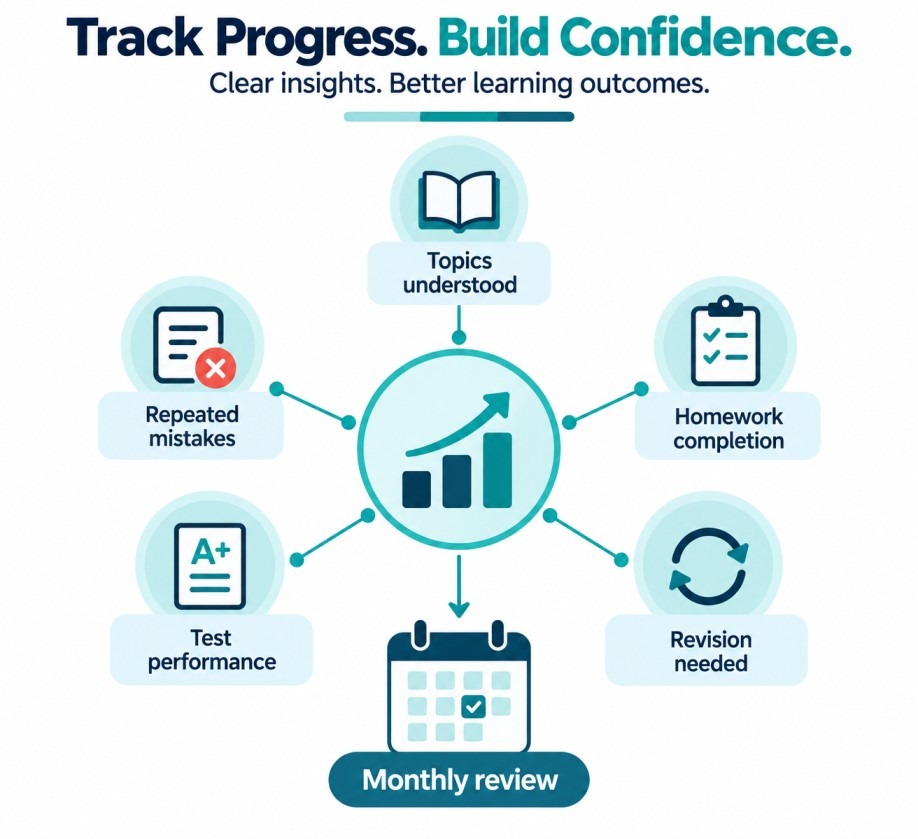
A useful tutoring plan should have evidence of progress.
Ask whether the tutor will track:
- Topics the student understands.
- Recurring error patterns.
- Homework and practice completion.
- Test performance.
- Topics that need revision.
A simple monthly review can show whether tutoring is actually solving the problem or merely keeping up with schoolwork.
Consider MyTutr as a Local Option
For parents in Powai and elsewhere in Mumbai, MyTutr offers 1-on-1 tuition for Class 7–10 Maths and Science across CBSE, ICSE, IGCSE and IB, with both online and in-person sessions.
The same basic standard applies: the tutor should understand the student’s level, teach interactively, and make progress visible rather than simply completing worksheets.
Frequently Asked Questions
Is online Maths tutoring effective for Class 7–10?
Yes, provided the student actively participates. A passive video-style lesson is unlikely to help much, but interactive one-to-one teaching can work very well for concept building and doubt-solving.
How many classes per week does a student need?
There isn’t one correct number. One or two focused sessions each week may be enough for a student who is keeping up, while a student with significant gaps may need more structured support.
Should the tutor follow the school textbook?
Usually, yes, but not exclusively. The textbook helps maintain alignment with schoolwork, while additional problems can strengthen understanding and application.
How long should a Maths class be?
For most Class 7–10 students, a focused session of around 45–60 minutes is practical. Longer isn’t automatically better if concentration drops.
What should parents do during online classes?
Don’t sit over the child’s shoulder throughout every session. Instead, give the student space to learn and ask for a short progress update from the tutor afterward.
When should we change tutors?
Consider changing if your child remains confused about the same concepts despite consistent attendance, avoids participating because of the tutor’s teaching style, or there’s no clear explanation of progress after a reasonable trial period.
The Final Selection Checklist
Before committing, make sure the tutor can demonstrate:
- Relevant Class 7–10 teaching experience.
- Familiarity with your child’s board.
- Interactive rather than lecture-only teaching.
- A clear approach to identifying learning gaps.
- Regular doubt-solving and practice.
- A sensible way to track progress.
- A teaching style your child feels comfortable with.
The best tutor isn’t necessarily the most popular or the most expensive. It’s the person who can make your child understand why a Maths problem works, not simply show them how to reach the answer. If you’d like to see how MyTutr approaches one-to-one Maths tutoring, you can book a free demo class : Connect With Us